Is OpenClaw the First $1B Solo Company? API-First Products, Brand Rituals & Buying a Top-Level Domain
Welcome to the Napkin Math podcast, where we talk about the latest stories, tactics, and business breakdowns
Speaker 2:From the world of tech, SaaS, and much more on the back of a napkin, live from London.
Speaker 1:My name is Saba.
Speaker 2:And I'm Charlie.
Speaker 1:And this is Napkin Math. Welcome back to the napkin math podcast.
Speaker 2:We covered a lot in this episode. Did we just see the first 1,000,000,001 person company?
Speaker 1:I don't think so. But anyway, to b sass lessons I learned Valentine's Day.
Speaker 2:Why you should build API first products. How to buy a top level domain from icann.dot napkin is coming soon.
Speaker 1:Register your interest down below.
Speaker 2:That's all I think. We talked about more stuff. There's other stuff too. Yeah. Enjoy the show.
Speaker 2:Enjoy.
Speaker 1:I'll kick us off with a b to b SaaS lesson I learned from Valentine's Day.
Speaker 2:I'd love to hear.
Speaker 1:So I had this ingenious idea.
Speaker 2:By the way, our show plans went right out the window.
Speaker 1:Yeah. There we go. But hear me up. I had this ingenious idea on Valentine's Day. I thought I would do something that no man has ever done before, buy a
Speaker 2:bunch of Go to Mars. No. Okay. What? Go to Mars?
Speaker 2:No. No. No. Okay.
Speaker 1:I thought I'd buy a bunch of flowers.
Speaker 2:Yep. Right. First you're the first person to do that?
Speaker 1:Ever. Mhmm. And write a card. So I went to the florist and I was like, oh, I quite like these ones around here and pointed to some very beautiful flowers. I said, I need a bunch.
Speaker 1:She's like, how much? Was like, 50, 40, 35 pounds. Mhmm. And and so she picks the bunch for me.
Speaker 2:Mhmm.
Speaker 1:That's a lie. It was actually 50 pounds. I don't wanna sound cheap on the podcast.
Speaker 2:I see.
Speaker 1:That's a bad look, isn't it? Yeah. Anyway, god, we're going out of schedule already. So I say, hey, I like this one. I like this one.
Speaker 1:And she starts putting a bunch together based on the flowers that I'm selecting.
Speaker 2:Mhmm.
Speaker 1:I go, I'm quite happy with my bunch. I think it looks quite nice. I go to the checkout. I pay. And as I do that, I saw another florist put together a bunch for a client, and they were doing it based on their own intuition, not based on what the client asked for.
Speaker 1:And this bunch of flowers looked so much better than my bunch of flowers.
Speaker 2:Oh my god.
Speaker 1:And I was so upset. I was like, I'm spending money on these flowers, and I just don't think they're good enough, and they've got a better ones. I want that one. So here's the B2B SaaS lesson.
Speaker 2:Hit me.
Speaker 1:Templates are so important for your customers.
Speaker 2:Okay. Right. Just They see what the end product looks like early. Charlie took the words right out of my mouth. Oh my god.
Speaker 1:I mean, like, the success of Canva was templates. Like, as a designer, I can go in. I can go and make my own design. But if I don't have templates, I'm not gonna have that professional looking output. The Canva template allows me to effectively take a professional designer's work and just change the text, change the image for my own use case.
Speaker 1:That's what I needed. Few other companies that do this. Miro. Miro have a bunch of templates for workshops, hiring, brainstorms, stuff like that. So I think that's another really good example.
Speaker 2:Mhmm.
Speaker 1:At Veed, we also have templates as well to help users get started. Also, I I think on trend is like prompt templates. I'm starting to see in the world of AI
Speaker 2:Mhmm.
Speaker 1:Where you can take someone else's prompt that's already written for you in image or video generation or even text prompts. So, yeah, b to b sales lesson I learned from Valentine's Day.
Speaker 2:Yeah. I love that. Yeah. And on the prompt templates thing, you know, that's not just good with products, but I've started to see educational products and courses. They don't just come with, like, here, watch this these videos for an hour.
Speaker 2:They come with like prompt examples that you can swap out bits and pieces. Yeah. Like, you know, to make it more relevant to your context, that kind of thing. So, yeah, I definitely see education becoming more interactive Yeah. Thanks to these.
Speaker 2:I've got a b to b SaaS lesson from Valentine's Day. It's a bit more abstract than yours. So Is it going to Mars? So valent no. Not this time.
Speaker 2:So, I mean, Valentine's Day hasn't always existed. And actually, originally, it's from the ancient Roman fertility festival of lupus acalia, but I digress. But one day, people decided this is an opportunity to actually monetize. Right? There you know, there's not like one business that owns Valentine's Day.
Speaker 2:You know, it's more categories like flowers and that kind of thing. But I've some I've seen the more more of this where, like, people just create a day or a ritual or, like, a festival just related to what their product is, and they can it's a really good way of owning that. A good example is there's this massive community for generalist careers called generalist world. It's super successful. It's taking off.
Speaker 2:Millie Tomasi that runs it is is awesome. And they created International Generalist Day. That was their invention. Right? And it's now like an, you know, entering culture where the top of the funnel is people who say, oh, a lot of people identify as generalists, especially these days.
Speaker 2:I want to celebrate international generalists. They say, oh, maybe this is cool event or this is like piece of content about it. And that gets them into the funnel into this awesome community. So think about what you do and think, can I make a day or a a cultural event around this thing? Now this isn't gonna work for everything.
Speaker 2:I don't know if you're gonna make social media scheduling day, for example. Maybe probably done it. Maybe you will. But, you know, I think that that is a lesson that I took from it recently.
Speaker 1:Interesting. I think rituals are more important than days for brands.
Speaker 2:Mhmm.
Speaker 1:So do you know what a Jaegerbomb is?
Speaker 2:I've heard of a Jaegerbomb.
Speaker 1:A Jaegerbomb is a Jagermeister with Red Bull.
Speaker 2:Mhmm. I don't know
Speaker 1:who invented this, if it was Jaeger or Red Bull or it was a JV, but they both do really, really well.
Speaker 2:Yeah.
Speaker 1:Right? That was, like, super popular when you were younger. The other ritual is Tiffany's invented the idea that if you're gonna buy an engagement ring, it should be how many months of pay? Four months or something?
Speaker 2:Something like that. Yeah. At least at least that.
Speaker 1:Yeah. Which is a great way of anchoring
Speaker 2:Related to this, I heard that De Beers, the very ethical diamond company and mining company, invented the idea of giving a diamond as an engagement ring They did. As well. They did. Checking these people in cahoots.
Speaker 1:The other one that is super interesting is the Michelin guide.
Speaker 2:This I love this. I love this so much. Tell me the story. So I I'm sure, you know, discerning listeners of napkin math will already know this. But just in case, the Michelin guide, which tells you all of the best restaurants in different countries and cities while you're traveling, is the same Michelin as Michelin tires.
Speaker 2:Right? I think a lot of you know this, but lots of people don't know this. And it they made it just because they want to get people to drive more, so they buy more tires. It's incredible. This is like the original piece of content marketing It's incredible.
Speaker 2:Pre Internet.
Speaker 1:It's incredible. It's like it's like us making tutorials on how to make videos should increase the amount of videos people make.
Speaker 2:Yeah. Exactly. Simple as that. Or you starting, like, the hot like, the film industry so people will, like, you know, make more videos later or something.
Speaker 1:Yeah. It's incredible.
Speaker 2:Yeah. A good example, they didn't create it, but Coca Cola co opted the myth of Santa and made him like a brand icon. Yeah. That's pretty big. And they help kind of took it on, but also perpetuated it at the same time.
Speaker 2:So Coca Cola is a good example. Supposedly, Hallmark greeting card company was one of the pioneers of giving a card for Valentine's Day, like a romantic card.
Speaker 1:You know what's interesting about the Santa Claus Coca Cola one is, are there any kind of, like, events that you can almost tack onto? So, like, every Halloween, you carve pumpkins, but no, like, end brand is the one that actually manages to capture that value. It's very dispersed. So it's also interesting about how can you be part of that conversation and attach yourself very well to it. Right?
Speaker 2:Yeah. Yeah. Exactly. Exactly.
Speaker 1:The the other what was the other one like? I I think this is bigger in America, but the idea of drinking milk.
Speaker 2:Yeah. Well, there was that campaign Got Milk, which is quite famous. It's probably what you're talking about probably came before that. Something else interesting is Kellogg's. Their rumours have, like, you know, popularized cereal, and they did actually popularized cereal.
Speaker 2:But it was heavily promoted by people like Kellogg's to make the idea that breakfast is the most important meal of the day Mhmm. Is a new concept that was created by marketers, basically. Like, if you go back to the cave the caveman times, there's a reason that a famous intermittent fasting technique is called the warrior diet because it's from, like, olden times. Because people just ate one meal a day because there was scarcity. The idea of having three meals a day in in this way is relatively new in human history.
Speaker 1:You know what? I actually think I can I can top you?
Speaker 2:Where? Hit me. You know what Nike invented?
Speaker 1:What? Jogging. No.
Speaker 2:They didn't. Yeah. They did.
Speaker 1:They actually so they actually did. So Shoe Dog is actually one of my favorite books, but Bill Bowerman was like Oregon track coach, basically. And Phil Knight, who was like the younger guy and one of the track runners, started the company, like, together. At the time, it's called Blue Ribbon Sport. But Bill Bowerman actually wrote this book called jogging, a physical fitness program for all ages.
Speaker 1:So they kind of invented jogging. And that's no that's not me, like, sugarcoating this. That's actually a thing.
Speaker 2:So for your business or brand or b to b SaaS, think about what activity, if happened more often, would cause people to buy my product more, and what should we own around this?
Speaker 1:I okay. I've got I've got a better one actually. Not a better one.
Speaker 2:Go
Speaker 1:on. One that's more relatable to the world that we're in.
Speaker 2:Mhmm.
Speaker 1:Who invented inbound marketing?
Speaker 2:I don't know.
Speaker 1:HubSpot. Did they? They did.
Speaker 2:No. That that can't be true.
Speaker 1:It's a 100% true. HubSpot inbound. Have you heard of the conference?
Speaker 2:No.
Speaker 1:Literally, the whole idea of HubSpot, and I could be completely wrong, but I think I'm right, is like
Speaker 2:That sounds
Speaker 1:like it could be right, is like you're doing outbound sales all the time. But if you write content, put it on your website, people are gonna come to your website. And then when you come to the website, we're gonna capture those details and put it in a CRM. I think that's literally what they pop
Speaker 2:That's genius. That's genius.
Speaker 1:And they've lent into it so much. They have now a conference called HubSpot Inbound, is like the biggest marketing conference. And so the equivalent for someone like me at Veed is like, we didn't invent shorts. Well, we kinda did.
Speaker 2:But like Oh, you sure shorts?
Speaker 1:Yeah. I mean, like, a Vine, that was like a format. Like, they they invented a Vine, and a Vine was a five second video. So like, can you invent a medium? Mhmm.
Speaker 1:Which is or like a, hey, we popularize some sort of, like, five second learning format. I don't know. You know?
Speaker 2:Yeah. And if you were best in the category, you know, Google became a verb just because there was just it became an active a new activity as well. Yeah. Basically, people didn't do before. So there's a lot of different approaches to it.
Speaker 1:Yeah. Wow. We've gone down the rabbit hole here.
Speaker 2:Yeah. Ask me if anything happened in the last week.
Speaker 1:Anything happened in the last week, Charlie?
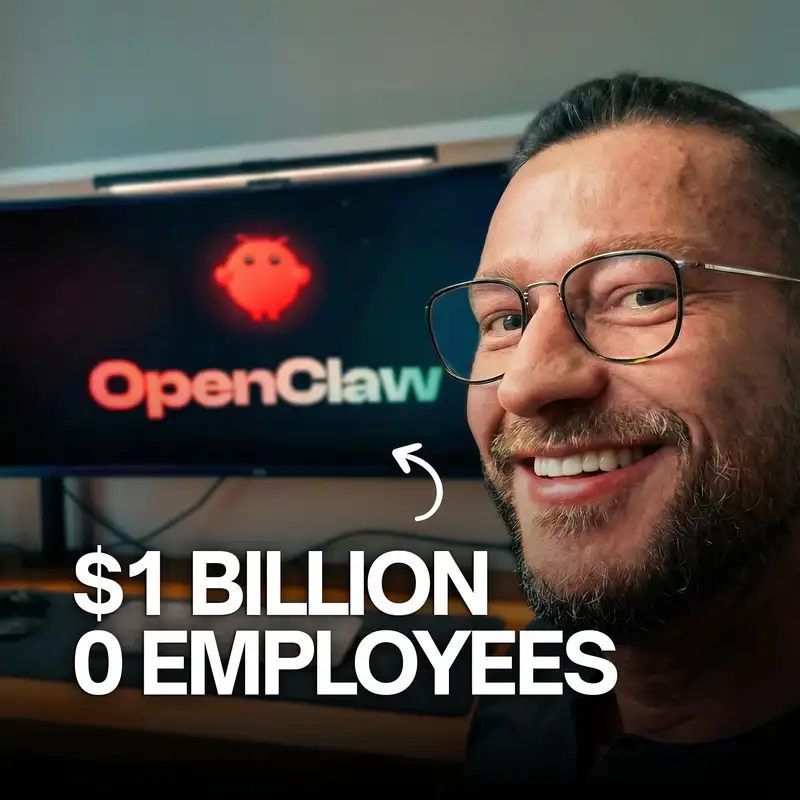
Speaker 2:Well, a few things. I think the big one everyone's talking about is the Open Claw quote unquote acquisition. There's a lot to unpack here. Do you hear about this?
Speaker 1:I did, but I'm not as in deep as you. So There's corners of
Speaker 2:the Internet
Speaker 1:that I don't enter, but I know you live in.
Speaker 2:Exactly. And that's the main question people were asking was, was this the first one person billion dollar company? And be we don't know how much he was paid. Peter Peter Steinberger, who was the, you know, creator of OpenClaw and the main it's an open source projects. Right?
Speaker 2:So the question is, can you even acquire a open source project? And let's just look at the actual tweet from what Sam Altman said. Peter Steinberger, is the person who made it, is joining OpenAI to drive next generation of personal agents. He is a genius and with a lot of amazing ideas about the future of very smart agents interacting with each other to a very useful thing for people and think it will become core to our products offering. But OpenCLORE will live in a foundation as an open source projects that we will continue to support, and the future will be extremely multi agent as important to support open source for this.
Speaker 2:So, you know, I don't think OpenAI are famous for supporting open source projects despite their name. I believe that they have open sourced a couple of models, but really, they do keep a lot of stuff in house. So first of all, I wanted to ask you, do you think this could have been a billion dollar acquisition? And second, was this a good acquisition for OpenAI or not? Now the I did a survey, and almost 50% think it was, like, 10,000,000 to a 100,000,000 as in the total package because, right, it's probably some stock, probably some cash.
Speaker 2:Right? And then only about the rest of them thought it was more than a 100,000,000, and only 12% thought it was a billion or more. What is the argument for my argument for it being a billion is there was a bidding war with Meta. Meta are known to drop a lot of cash on individual people. They were paying open just re researchers like a billion dollar package and things like that.
Speaker 2:Right? And it's also a huge well known brand and ecosystem. And so that's why I think and also Peter Steinberger, by the way, is rich. Like, sold his last company for a 100,000,000. So if you gave him 10,000,000, I don't think that's gonna make him get a job at OpenAI personally.
Speaker 2:So that was my argument. I don't know. I could probably wrong. What do you think?
Speaker 1:There's two things that I think here. One is the majority of acquisitions statistically happen around the 30,000,000 mark. I don't know why. It just does. Mhmm.
Speaker 1:I think it's because it's probably different in this case, but I think it's because it's like a significant amount of money to give back to investors and also the founders get some. There's no investors here, though. Correct. But I'm just saying, like, statistically, the average acquisition goes around, like, $3,040,000,000 dollars. Second thing is, I think this is a very simple acquisition
Speaker 2:Mhmm.
Speaker 1:Where the team at OpenAI were like, oh god. I really don't want, you know, Anthropic to get this or maybe to get this. I think it was like, if I like, I'll have it, so they don't.
Speaker 2:I agree. Anthropic have been on a generational run of kind of slapping OpenAI in the face, like Claw Code the last year, the Super Bowl ad, well, they were laughing at ads and chat GPT, this huge round they raised. I think, like, generally, people are saying, oh, that we keep seeing, like, victory over victory for On top of it.
Speaker 1:I think the only the only reason in my head that OpenAI would choose to do this is because a lot of people are saying that, like, they're running OpenCLORE with Claude or offline with Kimi, right, The open source model. Mhmm. I think the only reason they might be interested in this is if this ecosystem does take off, they wanna be the default model that runs on it.
Speaker 2:That would make sense. And also, the the top agent Wranglers, creators, there's not many of these people that you can actually hire. Right? Like Peter Steinberger. And that kind of he's elite talent.
Speaker 2:People saying this is like this is like a quintessential 100 x engineer, this guy. He's like an absolute beast. He did, like, 90% of all the contributions to this project. And if we if we see that Mesa think it's worth dropping a billion dollars on individual researcher, it's not unfathomable that you could drop a 100,000,000 package to a billion on on this guy considering the ecosystem and the bragging rights that sits on top of it. The question is, like, how much is, if it even if it is just, like, for the brand and for the the psychological victory to their implore to OpenArea's employees, to their investors against Anthropic, what's that worth to someone with that like Sam Altman?
Speaker 2:And I reckon it's more than 100,000,000 potentially.
Speaker 1:I I just don't know. Of course. Of course. I can't
Speaker 2:see
Speaker 1:in the road map. Like, I don't know what they're trying to achieve right now, but maybe this is very much in line with what they're trying to do. I would say on Peter Steinberg's website, there is his GitHub activity, and it's relatively actually, this time last year, he was doing, like, absolutely nothing. No commits. He started in April and then really ramped up around November, December, and January.
Speaker 2:Can you have Does it show the number there? It does. Because I read something that some supposedly, and I I genuinely read this. There's a day where he had 1,000 commits or more.
Speaker 1:But that's not crazy to think.
Speaker 2:From agentic engineering. Correct. Yeah. Yeah. But still, it was pretty crazy.
Speaker 2:Yeah.
Speaker 1:Yeah. Well, look, congratulations, Peter. Super cool. OpenAI is a great company, and they're doing great things, and you're doing great things with agents and respect. Hat tip.
Speaker 2:One other thing is he ships, like, 43 projects before he in the last couple of years before he ships OpenClaw. And he he didn't say that, you know, anything really about this. But people were saying, oh, this is proof that you just need to like keep shipping loads of projects, and one of them is gonna take off. And he basically dunked on this and said, the funniest take is that I failed, quote unquote, 43 times when people look at my repos and projects. But basically, all of these are part of OpenCLR.
Speaker 2:I had to build an army to make it useful. And so I think it kind of speaks to, like, there's kind of an op a debate online. Like, you just need to keep launching loads of projects, then one of them is gonna take off. And I think for most people, this is generally bad advice. Like, in the in the real world, people I meet who make great things, they actually iterate on something for a long time that becomes, like, something really good.
Speaker 2:And while these things you shipped have different names, they're not OpenClaw. They're all based a lot them are part of OpenClaw now. You know? Yeah. And so I thought that was kind of interesting about the narrative of, you know, the activity you do to be successful.
Speaker 1:Yeah. Like the infamous project git gif gerp, which is a terminal GIF search engine.
Speaker 2:Exactly. Yeah. Really powerful stuff. Very powerful stuff.
Speaker 1:Very powerful stuff.
Speaker 2:But a bunch of this stuff is now in OpenClaw, you know. I'm not saying that is specifically. There's like 43 of these. I almost swore there. I'm glad I didn't.
Speaker 1:God. God, imagine.
Speaker 2:I know.
Speaker 1:YouTube will be all over us.
Speaker 2:Something else really interesting happening is I've started seeing a lot more chatter about API first as a moat. And I've started so there's plenty of companies which are already API first. Right? Especially stuff that's selling to developers and things like that. So, you know, having an API for your business is obviously not new.
Speaker 2:But you're starting to see this with the types of products you wouldn't normally expect that from. So for example, Jack Frick's built post bridge is quite well known in the indie community, social media scheduler like Hootsuite or Buffer or something like that. And he got it's done pretty well. He's got like 20 a month. And it's like a pretty standard web app social media scheduler for x, LinkedIn, what have you.
Speaker 2:So he's made a big thing online about focusing on being API first and agent first. So basically, assuming that the product will be used in future more and more by agents than humans. So now he has a workflow where he can text his OpenClaw or whatever agent you have, and it will schedule his content rather than having to use the actual web interface. And he believes that people selling to agents being used by agents is going to just really grow a lot in future. And I thought it was very interesting because it seems to be bubbling into a different part of the tech world.
Speaker 2:But, yeah, I was curious to what you think about this trend at the moment. Would you think he's right to be thinking this way? How are you thinking about this at Veed? Talk to me.
Speaker 1:He is completely right. Yep. Yeah. So let's imagine this is a workflow. I'm in Gemini.
Speaker 1:I use Nano Banana to create a social media asset. I iterate with it. I then say, hey. Post this on my social media. And it basically says, yeah.
Speaker 1:What platform would you like to use? I've got access to Buffer. I've got access to Hootsuite, and I've got access to Postbridge.
Speaker 2:Mhmm.
Speaker 1:Right? Just like when I do build an app in Claude Code, I say, hey. Make a transcription tool for me. It says, hey. Do you wanna use AssemblyAI, Eleven Labs, or Google?
Speaker 1:You wanna be one of those free options. And I think Mhmm. I was speaking with someone at Stripe, and they said to me that they're thinking a lot about how do you become the default monetization platform in the world of vibe coding. Mhmm. And so I think we are all, as we've said before, the future of knowledge workers is gonna be interacting and building agents.
Speaker 1:I believe most of those agents are actually gonna be built by third party companies in and not the main big tech companies. Mhmm. Right? That's gonna be the future of software development. Mhmm.
Speaker 1:And so I think that we all need to make agent first products. I wanna be able to generate a video in Veed with Gemini. Yep. That's what I wanna be able to do. And I think yeah.
Speaker 1:And and also, it's not it's not out of the question to also think about the world where a micro app is built within Gemini
Speaker 2:Mhmm.
Speaker 1:Or ChatGPT or Claude that interacts with my API and a very like, you see how easy it is to now build UI wrappers.
Speaker 2:Yeah. So it just makes so this is the era potentially of personal software and software that's made and UI is just made on the fly for your exact use case.
Speaker 1:It's looking like that might be coming true.
Speaker 2:That's super interesting.
Speaker 1:I think I think you gotta ask yourself a question. If you're taking bets on the future, is SEO gonna grow or is agentic workflows gonna grow? Like, if you ask yourself very simply that question, it's clearly that agentic workflows are gonna be things that grow it that are gonna grow, therefore, stack your chips in that future growing market.
Speaker 2:So it's increasingly about, you know, the UX marketing side, what does the funnel look like with agents or being in a language model or core code as the top of funnel? How would you be more discoverable from that situation? And it might look a little different. They they do browse the web still, I believe. But I've heard of some people, for example, having all of their web pages.
Speaker 2:They have a markdown version as well, so it's easier to read for agents
Speaker 1:and stuff. I think Johnny spoke a bit a bit about this and said how well he's indexed in large language models. A lot of the jobs that we have to do in marketing is tell the world that you have a product, what it does, and why it exists.
Speaker 2:Yeah. It's Johnny of Remotion who we interviewed recently, by the way.
Speaker 1:Like, it's really that simple. Like, the job of most marketing teams is to tell the world in hopefully an engaging way that we have something. Here's how it works. Here's how you can use it.
Speaker 2:And you want to show up in their training data in a bunch of different ways as well, I guess.
Speaker 1:I mean, I also I also noticed the other day, I was looking at there's a really famous video generation model called Cling to Free. Right?
Speaker 2:Have you
Speaker 1:known Cling Free?
Speaker 2:Yep.
Speaker 1:Yeah. So I was looking at the company that the the comp the first company that ranks after Cling for a branded term and why, and it's because they had 30 blog posts about Cling. How to use Cling, Cling Prompting Guide, Cling verse, you know, the Alibaba model. So they had the most extensive information about this model.
Speaker 2:Mhmm.
Speaker 1:And therefore, they ranked second behind the brand for the keyword, which basically means Crazy. If you can have a lot of information online about your product, how it works, what it does, you will come up very, very high in those rankings.
Speaker 2:Really interesting. And in a world where, let's say, API is gonna become more of a first class citizen than the UI, what do you think is still gonna be true to win in that world? Like, what do you still need in that world that you currently need? Well, I mean,
Speaker 1:Y Combinator famously have always been very API first and to build and and have always recommend hackable products. I think that's still true and becoming even more true right now. We don't know what the future is, but I think if you can make your product interact with other products, it puts you in a very good place.
Speaker 2:Yeah. I guess people still also needs to trust you and, you know, if you have some kind of brand modes or proprietary data, that probably helps as well. A new thing I saw, I've never seen this before, was someone made a product with a UI, you know, could use by humans. And it's free for humans to use, but you have to pay for agents to use it for API integration to be able to use it using a language model, that kind of thing, which I thought was very interesting. So you're kind of that's just part of the marketing strategy just to get people to use it and trust it.
Speaker 2:Think this is a good tool. Oh, I think I'll integrate it in my AI workflow kind of thing. So I suspect we might see that a little more in future.
Speaker 1:Yeah. I think over the last few years since Chat Cheapity came out, most people have in some shape, way, or form added a large language model into their product Mhmm. To perform certain functions in certain jobs. And I'm gonna be really honest with these people. You are failing.
Speaker 1:You are absolutely failing. You've taken the existing product and retrofitted AI tooling into it.
Speaker 2:They call this is it skeuomorphism?
Speaker 1:It's it's weird. It's honestly strange. And I'll give you a really good example of this. Right? A good example is, have you used Nano Banana?
Speaker 2:Yep. Where do you use Nano Banana? In Nano Banana.
Speaker 1:Right. You don't use it in Photoshop? No. No. It's crazy to open Photoshop this very heavy clunky piece of software design professionals to then use Nano Banana.
Speaker 1:It just doesn't make sense. However, I do think you might use Nano Banana and then take the image into Photoshop to touch it up. Right? And I think a lot of people are getting this wrong. And I think everyone needs to ask themselves a really honest question.
Speaker 1:Have I built a really great AI first product, period, that is actually market competitive?
Speaker 2:Mhmm.
Speaker 1:And I think the real answer to this is no. Most people know. And if you look at all the public market SaaS stocks, they're all going down, and I think it's probably for that reason and that reason alone.
Speaker 2:Mhmm.
Speaker 1:And it's back on this what you were saying about, like, building agent first, API first products. Like, what we're basically saying is, can you build an AI first product that can stand up on its own that is providing value? And I think if you don't, there's gonna be a YC company that does.
Speaker 2:Yeah. It's gonna come and eat your lunch.
Speaker 1:It's gonna come and eat your
Speaker 2:I'm curious with a a product like Veeze, which is primarily people use via your user interface, edit videos, or use it myself, works great. How and you've you've had an API for a while, obviously, and you also have the other kinds of like the lip sync API. How would you see a products like yours evolving like this? Like, do you see people be able to talk into a language model to integrating with Veed to make a video? Or do you see more people using text to video within Veed?
Speaker 2:Or do you ever do you see people who's just agents creating videos of Veed? How are you kind of thinking about it at the moment?
Speaker 1:So I think this is what's really tough, and this is why I'm being a little bit brutal with with my terminology and language here. But, like, to get from the leap you need to make as a company like Veed from making video editing software to creating generative AI video products is really quite far. Like, it's a very, very big leap. We're used to people coming to our platform with videos that they've recorded on their phone that they need to edit. Right?
Speaker 1:The blue Ocean is this generation space. Right? But we're used to people bringing their own videos and not generating them. So what we did was we put generative tools and, like, video generation within our video editor. And we're like, oh, great.
Speaker 1:10,000,000 people use this. Add generation tools into it. Makes a lot of sense. But the reality is people record footage on their phone and then they edit them. So why are we expecting them to go to an editor to generate?
Speaker 1:The workflow is completely different. Therefore, you need to build a video and image first generation product.
Speaker 2:Mhmm.
Speaker 1:And then you can take those products and then, you know, give them to your editor. Right? And I think a lot of people, you know, need to think a lot more AI first with how they're putting their product roadmaps together and actually potentially just stop altogether and say, hey. We're really fortunate that we have 10,000,000 monthly users, x amount of millions in revenue. Let's now focus on going in this new direction.
Speaker 2:So kind of thinking from first principles, like, I started this thing today with this technology, what would I do rather than tacking it on to what I already have? And hope and hoping that that's enough.
Speaker 1:Correct. I think a lot of people throw around the word first principles because it makes them sound really smart.
Speaker 2:That's why I use it. But it is it is true, though.
Speaker 1:It it is true, but there's very few people that are running a company that can stand up and say, hey. The world has actually fundamentally changed. And by the way, the world doesn't really change overnight either. No. The world changes on a gradient, right, that sometimes goes up and down in pitch based on what's happening in the world.
Speaker 1:And I think that we're at the point on that line where if you are building a product, you need to get your shit together now.
Speaker 2:For sure. So I was thinking this question.
Speaker 1:Hang on. What? Sorry. To to your posting, the guy that the the social media scheduling tool, Postbridge, I think the best thing to for this is, like, how do you make this a a, you know, AI first? He's doing exactly the right thing.
Speaker 1:Yeah. He's doing exactly the right thing. Make it work for an agent.
Speaker 2:Love that. And on this topic, had this question recently about how do you know is the right level of experimenting with these new tools, you know, thinking in first principles, but not getting too distracted? How to say stay sane in the AI Gold Rush? Because there's a few kind of different failure modes here, I think. One is do nothing.
Speaker 2:So ignore it. Think either you don't know about it or you think it's overblown. I think that's a mistake. I think you'd agree. The other side is people I've seen some people, they they're so caught up in, like, every new release, every new tool, and it is wicked.
Speaker 2:But sometimes people are mistaking activity and busyness for progress, but they're just kind of spinning their wheels and just kind of shipping and trying lots of things, but not really moving the needle. How do you think is the best way to think about is it is it just somewhere in the middle is the best place to be with this?
Speaker 1:So I there's a lot of noise out there. And as someone who makes a lot of noise and specializes in making noise, I think the scariest thing that you can do is make noise. Right? You've just gotta get yourself out there and get as many eyeballs on you as possible. Like, I think I think a lot of people just haven't appreciated that the game has changed.
Speaker 2:I think there's some I think there is some cope. A little bit of cope.
Speaker 1:I think people need to appreciate that, like, the really nice, stable, steady world of, like, SaaS where you write a blog post, you do SEO, you charge for monthly subscriptions, and it stacks up month for month. Like, that world is is gone.
Speaker 2:I saw a People need to get with the program. Right? There was a good tweet by Rune. He's a famous tweeter who works at OpenAI. This is actually a year ago he posted this, but his post was people are not mentally prepared for if this isn't a bubble because a lot of people are just assuming, okay.
Speaker 2:Yeah. It's like a lot of hype right now, lots of funding, but it's gonna just, like, wither out at some point kind of thing. And I think people need to be prepared for, like he says, it not being a bubble. And, actually, it's kind of like when mobile came along, it's not exactly the same mobile, but, like, mobile wasn't a bubble. It was just the way things work now.
Speaker 2:It's just a new paradigm of how people use software and computers, basically. Yeah. And I think it's more similar to that than some of the comparisons I've seen and probably a bigger deal with mobile.
Speaker 1:So the way that I've been thinking about this is like and I and, you know, Mark Zuckerberg has said a similar thing with the kind of the the price that he's paying to try and stay relevant in the world of AI. It's like, I would prefer to put all these chips on the table and be wrong than regret it.
Speaker 2:Yeah. Right. Because there's also a threshold thing here where whoever is the first to get to AGI, that's like potentially the biggest moat you could ever have in technology. Or, you know, something that people commonly agree is some kind of AGI. This is like something that hasn't really existed before.
Speaker 2:And so, you know, to get your competitor creating something like this is probably the worst thing that can happen to you, I suspect. Yeah. 100%. So you have a business breakdown for me, don't you, Saba?
Speaker 1:I do. So if you treat into our last episode, we we said that we would commit to working out what it would take and how you could go about buying a dot something. So us here at Napkin Math are very interested in buying the directory dot napkin. Why? Because we think there's a
Speaker 2:because it's awesome. Because it's awesome. First and foremost.
Speaker 1:And pretty much we think every tech startup, whether it's Notion, you know, Harvey, is gonna want Harvey dot napkin. It just makes so much sense. Last week, we committed to doing a bit of research to work out what would it take to buy our own top level directory, something like a dot napkin. And we all know that dot napkin is a pretty exclusive
Speaker 2:That's pretty awesome.
Speaker 1:Yeah. And I could imagine everyone listening to this podcast or even popular companies like Notion would want notion dot napkin.
Speaker 2:Of course. Google dot napkin.
Speaker 1:That's got a ring to it, isn't it?
Speaker 2:I think so. Yeah. Yeah. Cool, Sergei.
Speaker 1:Yeah. Mhmm. Yeah. Open dot napkin.
Speaker 2:Yeah. Yeah. That's good. Yeah.
Speaker 1:Anyway, so to do this, we have to call up our good old friends, iCan.
Speaker 2:ICan is what, Charlie? So I looked this up. So iCan is the Internet Corporation for assigned names and numbers, and it's from 1998. Look at the logo. I didn't have to tell you that's from 1998, did I?
Speaker 2:No. It's like Netscape era. And this is these are the people this is like the mafia of domains. Like, if you want to create your own domain so a TLD is a top level domain. So that's what .com.ai.
Speaker 2:These are all top level domains. A lot of them are owned by governments, not all of them. And, yeah, this is who we need to speak to.
Speaker 1:Yeah. So we're gonna call up iCan, and iCan is gonna say, hey, boys. To get your dot napkin, you need to give us $200,000 as a nonrefundable fee just to have a look at it.
Speaker 2:So they could look at me and say something like, can you afford this amount? And I will say, yes, I can. Yeah. Do you get it?
Speaker 1:I'm the one who you meant to
Speaker 2:do dad jokes over. Okay. Yeah. Because you're you're the dad. Yes.
Speaker 2:Correct. Fine.
Speaker 1:So next, you need to do a ten year lease for Dot Napkin.
Speaker 2:Okay.
Speaker 1:Right? Reasonable. Which then you can renew
Speaker 2:and then So like $20.25 k per year.
Speaker 1:Yeah. 20 k per year legal. Then you have to run a server that hosts the dot napkins. So it actually looks like it say, you know, 500,000 a year, but obviously, we're not gonna be hiring people in The US. No.
Speaker 1:We'll be using agents. Mhmm. Also European, which means we can probably run this for about a $100 a year.
Speaker 2:Yeah. Skellis and crew, if you will. Yeah. Yeah. 100 k.
Speaker 2:Yeah.
Speaker 1:And also Peter Steinberg will be our adviser.
Speaker 2:He will. He will agree to this.
Speaker 1:Yes.
Speaker 2:Yes. Yeah. Yeah. Yeah. Yeah.
Speaker 1:That's that's like the finances of how to get dot napkin. I don't know if there's a political process where like, I don't know if they just give you a dot napkin.
Speaker 2:I don't think so. I think so I think there are a lot high standards around things like security compliance, but as long as you can do they trust that you will fulfill it, you're fine. So we'll be okay.
Speaker 1:You so you think it's actually quite transactional to get a dot napkin?
Speaker 2:Yes. But the money is not enough. They need to trust that you're not gonna mess this up, basically. And you're not gonna have loads of bad actors, you know, using it for all sorts of nonsense. So, yeah, I think we could do it.
Speaker 1:Just in case anyone from iCAN is listening, I've got GCSEs, a levels, and a first class degree.
Speaker 2:You can trust us.
Speaker 1:You can trust us.
Speaker 2:Yeah. Exactly. Thanks, iCAN.
Speaker 1:Thanks, iCAN.
Speaker 2:And so how much do you think your average dot napkin domain is worth? So when I buy like a typical, I don't know, a.co or something. On average, you're spending what, like $20 or something like that. So I think a.co.
Speaker 1:Of course, a.co is $20. A dot napkin
Speaker 2:So what do you think the average price will be for a dot napkin? So Let's use let's use a napkin mask.
Speaker 1:When when I buy an IO Yeah. It's like $60. Okay. So let's say 50 for a dot napkin.
Speaker 2:$50. Okay. So we need to sell about 2,000 dot napkin domains a year to break even on a 100. Right?
Speaker 1:Okay. How many okay. If you That's the average. So if you're watching this on YouTube and you're excited by the possibility of a dot napkin, please let us know below.
Speaker 2:Let us know in the comments. Like and subscribe as well, please.
Speaker 1:Yeah. Let us know what that you want one. And if we get enough ground swell, we could start getting
Speaker 2:on the blower and speaking to ICANN. You could win a dot napkin domain.
Speaker 1:Yeah. And we all know that the fastest growing anyway, we all know that the fastest growing companies use dot napkin.
Speaker 2:So I actually think there's something interesting in this. So the two main ways you might make money. So we we know we obviously wanna sell like say 10,000 a year, something like that. It's also kinda good bragging rights, isn't it? Just to own a TLD.
Speaker 2:Like, if you have the money to have that, like, that's actually just like a massive flex as well.
Speaker 1:Oh, I just had an idea.
Speaker 2:What's that?
Speaker 1:Hit me. I don't know much about this world. Okay. But we're learning as we go.
Speaker 2:We
Speaker 1:are. When you go Namecheap or GoDaddy and you put in the word napkin math, it says, hey.com.co.uk.io.so, and then there's a bunch of randoms.
Speaker 2:Mhmm.
Speaker 1:I bet you Namecheap own all those randoms.
Speaker 2:Do reckon? Yeah. They probably own a lot of those, actually. Yeah. Because who's bothered to make a dot lol?
Speaker 1:Because if you because if you have if you have a domain
Speaker 2:Mhmm.
Speaker 1:The next thing, top level domain, you now need to sell it, which means you need distribution.
Speaker 2:Mhmm.
Speaker 1:Where do you sell it? You need to get onto Namecheap, GoDaddy. But I'm sure Namecheap and GoDaddy aren't like, yeah. Sure. Come over here.
Speaker 2:They've got the ultimate distribution. So maybe the play is create your own domain registrar where you can just, like, resell these as well. So we need to also acquire a registrar, is what you're saying? No. And partner with them.
Speaker 1:Well, let's go back to something interesting we talked about earlier about building the API infrastructure to register domains
Speaker 2:Mhmm.
Speaker 1:Through a large language model or a chat via an MTP or an API.
Speaker 2:Mhmm.
Speaker 1:Maybe build the piping that I can register domain names as an agent.
Speaker 2:That's actually really interesting because this is actually hard to do this. So Namecheap doesn't let you register domains through their API supposedly.
Speaker 1:Mhmm.
Speaker 2:I think there are some which do let you do this. So maybe like an agent first registrar, maybe doesn't have a UI. It's just completely an API for registering domains Correct. And with agents. Correct.
Speaker 2:That's something interesting in that.
Speaker 1:It is interesting. The other thing that's actually really interesting is you could also potentially make a tipping point service website here where it's like, you go on and say, hey. I wanna get sabbat.vibe.
Speaker 2:Mhmm.
Speaker 1:And other and if enough people are like and then you say, hey. Here's $50. And if enough people say, hey, actually, I want a dot vibe
Speaker 2:Mhmm.
Speaker 1:Then you as the company go and register dot vibe with everyone's state money. Yep. And then, basically, that's a way for you to be able to afford it. Right?
Speaker 2:Yes. An easy way for you to to love. To crowdfund it.
Speaker 1:Yeah. You crowdfund your own top top level domains.
Speaker 2:Yeah. That's interesting. Yeah. What do you think are some of the up and coming TLDs? So AI, so that is it the Anguilla Islands that absolutely cleaned up from this?
Speaker 2:The Indian Ocean. So it's dot AI is a there's like a tiny country, British overseas territory, Anguilla. They make that £29,000,000 a year was in 2024. So, yeah, they're making, like, tens of millions of pounds a year from this at least. So And this is for a small country like them.
Speaker 2:It's actually a lot of money. The next one, I think,
Speaker 1:is dot
Speaker 2:go on.
Speaker 1:No. Well, dot I 0. So this is the British Indian Ocean Territory, b I o t, but shortens to Dot I 0. Mhmm. They had no idea this would become popular.
Speaker 2:No. So
Speaker 1:let's see how much revenue these guys make from it. Is that it? Has generated approximately 40,000,000 annual revenue?
Speaker 2:I feel like it's more than this.
Speaker 1:It has to be.
Speaker 2:But the next one is Moldova because they have .md. So I think all the I'm seeing people who are making AI companies who can't go get a dot a I, they're all moving to .md now.
Speaker 1:I'm gonna say if .io only makes $40,000,000 a year, I'm not that interested in this unless
Speaker 2:What? You're check this before, Safa.
Speaker 1:No. But, like, I mean, like, it like, I .io is, like, a really popular domain.
Speaker 2:You thought it would be more than this, didn't you? I think if it said 200,000,000, I'd be like, okay. Let's register dot napkin and make it rain. But if it costs us a 100 to 2,200 thousand dollars a year to run, that's a pretty good business, I would say. Is it not?
Speaker 2:Yeah. I suppose it's a good that's pretty good.
Speaker 1:You know what? I bet you this has low churn. This is a low churn business.
Speaker 2:I think it is a low
Speaker 1:churn business. Business.
Speaker 2:Do know what mean? Because you could also, like, you can just turn off auto renew. You can't cancel after three months. You have to buy a domain for, like, one year plus. Right?
Speaker 1:It's an interesting cash flow problem, this business. Like, anyway, is is there's something in there's something interesting here. I don't know too much about it. But yeah.
Speaker 2:If here's here's a question. If let's imagine that agentic commerce become flips human commerce, as an agent are basically making all the purchasing decisions in discovering stuff, buying stuff. Do you even need a top level domain for that? Like, isn't that just like a pretty way of obfuscating an Internet web address, basically? That is human readable and memorable.
Speaker 1:I think that these endpoints aren't gonna go anywhere. It's it's like the equivalent of a Twitter handle on the Internet. Like, you need a handle or you need a URL to pipe things to and from. URLs hold data in them. Simple as that.
Speaker 2:Yeah. Yeah. No. I'm just saying that, like, know, a.com, is that not just like a wrapper of a bunch of, like is there a way to find a website if you don't have a TLD is what I'm saying? I don't actually know.
Speaker 2:I don't know the answer.
Speaker 1:Because if you think about it, a web page holds information on it.
Speaker 2:Yeah. Yeah. No. No. I understand that.
Speaker 2:But yeah. I just thought it was like some kind of the TLDs were made just to be more human readable, basically. But I might be wrong.
Speaker 1:You could go to 1.92.2.6.one. Right? Like, and find an address, but yeah. No.
Speaker 2:The CLD is here to say.
Speaker 1:Yeah. And also also dot napkin, not not being funny, but that's pretty impressive.
Speaker 2:That's me banging, isn't it? Yeah. Yeah. Amazing. Okay.
Speaker 1:So So just to finish off off on this, I came up with a few ideas
Speaker 2:You have ideas? On top level domains Okay.
Speaker 1:What else? That I would like to register.
Speaker 2:Let's
Speaker 1:see. So taking into account, we're going to the era of vibe coding
Speaker 2:Mhmm.
Speaker 1:More were already in it. We're going into the era of agents, into MD files. I thought the first one that I thought could be quite cool is .vibe. Mhmm. So this is for all the Vibe coders out there.
Speaker 1:Register your .vibe domain.
Speaker 2:Mhmm.
Speaker 1:Host it on that, and and people will know that you've got a good dot vibe product. The other thing that could be interesting with the dot vibe is if you go to any website that is a dot vibe and go forward slash edit, pop you straight into a vibe coding app so you can pick off just where you left on.
Speaker 2:That's wicked. Like, have you seen dot new? No. So Oh, yeah. Yeah.
Speaker 2:Yeah. So the dot new is made in such a way where it you have to, like, start a new application or some or, like, process or something. But it can be, like, anything. But stuff like that is really creative. Yeah.
Speaker 2:So if you
Speaker 1:go video dot opens the Google video products. I think if you go edit.new, I think we come up or used to come up. Yeah. If you go to edit.new, it's Veed. Check that out.
Speaker 2:That's really cool, actually. Yeah. I didn't know that. Yeah. You do know.
Speaker 2:Alright. Here is here is my idea for t o d.
Speaker 1:But that's a business. But that's a business. Yes. Someone's came up with this concept that, hey, dot new is a way to launch an app.
Speaker 2:Is that could you make an icon wrapper, basically, where you handle all the bullshit, but you basically you take on you buy a basket of these TLDs, like thousands of them or something like that, not expecting to sell many, you know, for, like, lots of, like, small ones where they can't expect to sell more than, like, a dozen. But you buy, like, thousands of them and you just wrap thousands of them in your own. We will look after this logistically, like, financially
Speaker 1:Oh my god.
Speaker 2:Compliance wise.
Speaker 1:Charlie, this is just shows how little we know about the world. Mhmm. I imagine if you say, hey, we're gonna register ..natkin. You go and sell a bulk to Namecheap. You go sell a bulk to GoDaddy.
Speaker 1:Like, it's part of the the economics of it. I think you do that. You go also, could go to the go go Google and say, would you be interested in buying this before it gets released? I don't know. There's there's something there's something here.
Speaker 1:It it's more it's honestly feels like more of a financial transaction than it does running a company. But I honestly, I imagine people are getting pretty bored of the iCAN chat.
Speaker 2:No. No. No. Because I have a TLD idea. Okay.
Speaker 2:What you got? You have the TLD of dot AGI.
Speaker 1:Okay.
Speaker 2:And you only sell one. You can only buy one, and you have a bidding war between because eventually, they might all have their own versions. You have OpenAI and and and Google all bidding for this one TLD, and you just take the highest bidder? Yeah. Not bad.
Speaker 2:It's not bad, is it?
Speaker 1:I've got
Speaker 2:Do you register that?
Speaker 1:So I've I've actually got a I've got one that that can compete with this.
Speaker 2:What's that?
Speaker 1:It's the same as yours, but drop the I. It's cleaner. Just a g for agentic.
Speaker 2:So a g? No. Don't think that's as good. Okay. Got I mean, mine's better.
Speaker 2:I got another one. Okay.
Speaker 1:.Pr.
Speaker 2:Yeah. Okay. Okay. Can you do .agents?
Speaker 1:Yeah. Of course.
Speaker 2:Well, no, As in, like, does that exist? I think so.
Speaker 1:I don't know.
Speaker 2:If not, that's a good one.
Speaker 1:I'm just talking out my ass. I have no idea. Great. And I've got dot o p, but I can't remember what that standard for set stood for. On point.
Speaker 1:Of course. It's nice though. O p.
Speaker 2:Yeah. I like OP. The OP. Nice.
Speaker 1:It rolls off the tongue nice.
Speaker 2:Let us know. Message us wherever, Twistr, WhatsApp, whatever. Tell us what TLD do you wanna see and how much are you gonna spend on your own dot napkin. And if you send us this, when we launch dot napkin, you could be the winner of your very own dot napkin t l d. Cool.
Speaker 2:Thanks, Abad. See you. See
Speaker 1:you.